

The Role of AI in Vehicle Diagnostics and Maintenance: Revolutionizing Automotive Care
Share this:
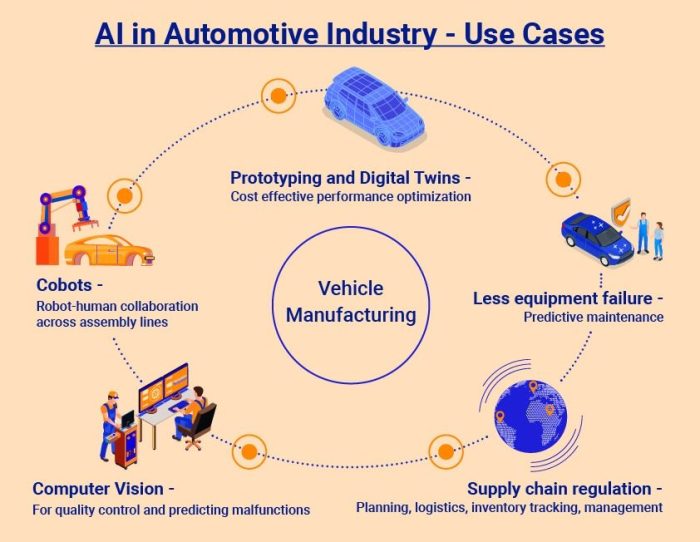
Exploring the pivotal role of AI in vehicle diagnostics and maintenance unveils a realm where cutting-edge technology intersects with automotive care. This article delves into the transformative impact of AI, shedding light on its applications and benefits in revolutionizing the way vehicles are diagnosed and maintained.
From enhancing accuracy in identifying issues to predicting maintenance requirements proactively, AI stands at the forefront of reshaping the automotive industry's maintenance landscape.
Introduction to AI in Vehicle Diagnostics and Maintenance
Artificial Intelligence (AI) has revolutionized various industries, including automotive, by enhancing vehicle diagnostics and maintenance processes. AI refers to the simulation of human intelligence in machines programmed to think and act like humans. In the context of vehicle diagnostics, AI utilizes algorithms and data to analyze and interpret complex issues within a vehicle's system.
This technology is reshaping traditional maintenance practices in the automotive sector, offering more efficient and accurate solutions.
AI Applications in Vehicle Diagnostics and Maintenance
AI is transforming the way vehicles are diagnosed and repaired, leading to improved operational efficiency and reduced downtime. Here are some key examples of AI applications in vehicle diagnostics and maintenance:
- Predictive Maintenance: AI algorithms analyze data from sensors to predict potential issues before they occur, allowing for proactive maintenance and preventing costly breakdowns.
- Vehicle Health Monitoring: AI systems continuously monitor the health of vehicles by collecting and analyzing real-time data, enabling early detection of anomalies and malfunctions.
- Diagnostic Assistance: AI-powered diagnostic tools can quickly identify and troubleshoot problems by analyzing historical data, symptoms, and patterns, assisting technicians in the repair process.
- Automated Inspections: AI technology can automate inspection processes by using machine learning algorithms to detect defects, damages, or wear and tear in vehicles, improving accuracy and speed.
Benefits of AI in Vehicle Diagnostics
AI technology offers numerous advantages when it comes to vehicle diagnostics and maintenance. By leveraging AI capabilities, the process becomes more efficient and effective, leading to improved overall performance of the vehicle.
Improved Accuracy in Diagnosing Vehicle Issues
AI systems have the ability to analyze vast amounts of data in a short period of time, allowing for more accurate and precise diagnosis of vehicle issues. By identifying patterns and trends in the data, AI can pinpoint potential problems that may have been overlooked by human technicians.
This leads to quicker and more reliable diagnoses, ultimately saving time and money for both vehicle owners and repair shops.
Predicting Maintenance Needs Before Breakdowns Occur
One of the key benefits of AI in vehicle diagnostics is its predictive maintenance capabilities. AI algorithms can analyze data from various sensors and monitoring systems within the vehicle to detect signs of potential issues before they escalate into major problems.
By predicting maintenance needs in advance, AI helps prevent breakdowns and costly repairs, ensuring that the vehicle stays in optimal condition and operates smoothly at all times.
AI Technologies Used in Vehicle Diagnostics
AI technologies play a crucial role in modern vehicle diagnostics, helping to identify issues quickly and accurately. There are several AI technologies employed in this field, including machine learning, deep learning, computer vision, and natural language processing.
Machine Learning vs. Deep Learning
Machine learning and deep learning are both subsets of artificial intelligence, but they differ in terms of complexity and functionality. In vehicle diagnostics, machine learning algorithms are commonly used to analyze data and detect patterns that indicate potential problems. These algorithms can be trained on large datasets to improve their accuracy over time.
On the other hand, deep learning involves neural networks with multiple layers that can automatically learn to extract features from raw data. While deep learning can achieve higher levels of accuracy, it requires more computational power and data compared to traditional machine learning approaches.
Role of Computer Vision and Natural Language Processing
Computer vision plays a vital role in diagnosing vehicle problems by enabling machines to interpret visual information from images or videos. For example, computer vision systems can analyze images of engine components to detect signs of wear or damage. Natural language processing, on the other hand, helps in understanding and processing text-based information related to vehicle diagnostics.
By analyzing text descriptions of symptoms or error codes, natural language processing algorithms can provide insights into potential issues and recommend appropriate solutions.
Challenges and Limitations of AI in Vehicle Maintenance
Artificial Intelligence (AI) has undoubtedly revolutionized vehicle diagnostics and maintenance, but it is not without its challenges and limitations. Let's delve into some of the key obstacles faced when implementing AI in vehicle maintenance.
Challenges Faced in Implementing AI for Vehicle Maintenance
- Complexity of Vehicle Systems: AI may struggle to accurately diagnose issues in modern vehicles with intricate and interconnected systems.
- Data Quality and Quantity: AI algorithms heavily rely on data, and the lack of sufficient high-quality data can hinder their effectiveness in diagnosing problems.
- Interpretation of Ambiguous Data: AI may find it challenging to interpret ambiguous or incomplete data, leading to inaccurate diagnosis and maintenance recommendations.
- Integration with Existing Systems: Integrating AI solutions into traditional maintenance processes and systems can be a complex and time-consuming task.
Limitations of AI in Accurately Diagnosing Complex Vehicle Issues
AI, while powerful, may struggle with certain aspects of vehicle maintenance, especially when it comes to diagnosing complex issues. Some limitations include:
- Limited Contextual Understanding: AI may have difficulty understanding the context of a specific vehicle problem, leading to misdiagnosis.
- Inability to Handle Unforeseen Situations: AI systems are typically designed to handle known scenarios, making them less effective when faced with unprecedented issues.
- Lack of Physical Inspection: AI relies on data inputs and may not be able to physically inspect the vehicle for certain types of problems that require manual examination.
Potential Risks Associated with Relying Solely on AI for Maintenance Decisions
While AI can greatly enhance efficiency and accuracy in vehicle maintenance, there are risks associated with solely relying on AI for maintenance decisions:
- Overlooking Human Expertise: AI may not always factor in the expertise and intuition of human mechanics, leading to missed diagnoses or incorrect repair recommendations.
- Dependency on Technology: Excessive reliance on AI for maintenance decisions could potentially lead to a loss of critical thinking skills among human technicians.
- Data Security Concerns: AI systems are vulnerable to cyber threats, raising concerns about the security and privacy of vehicle data stored and processed by these systems.
Future Trends in AI-Powered Vehicle Maintenance
AI advancements are set to revolutionize the landscape of vehicle maintenance in the near future. The integration of artificial intelligence with IoT devices for real-time diagnostics and the potential for autonomous AI-driven maintenance processes are expected to bring about significant changes in the automotive industry.
Integration of AI with IoT Devices
The combination of AI and IoT devices allows for the seamless collection and analysis of real-time data from vehicles. This integration enables proactive maintenance by predicting potential issues before they escalate, leading to improved vehicle performance and increased safety on the roads.
Autonomous AI-Driven Maintenance Processes
The automotive industry is moving towards autonomous maintenance processes powered by AI. With the ability to self-diagnose and even perform certain maintenance tasks autonomously, vehicles equipped with advanced AI systems can reduce downtime, lower maintenance costs, and enhance overall efficiency.
Last Point
In conclusion, the advent of AI in vehicle diagnostics and maintenance heralds a new era of efficiency and precision. With the promise of predictive maintenance and seamless integration with IoT devices, the future of automotive care is poised for remarkable advancements driven by artificial intelligence.
FAQ Resource
What are the common advantages of using AI in vehicle diagnostics?
AI can enhance accuracy, improve predictive maintenance, and streamline diagnostic processes, ultimately leading to cost savings and increased efficiency.
How does AI differentiate between machine learning and deep learning in vehicle diagnostics?
Machine learning focuses on algorithms that improve automatically through experience, while deep learning involves neural networks that mimic the human brain's structure to analyze complex data.
What are the potential risks of relying solely on AI for maintenance decisions?
One risk is the limitations of AI in accurately diagnosing intricate vehicle issues, which may lead to overlooking critical problems that require human intervention or expertise.